Rigpa - Over the Years
“Rigpa is a Tibetan word, which in general means ‘intelligence’ or ‘awareness’. In Dzogchen, however, the highest teachings in the Buddhist tradition of Tibet, rigpa has a deeper connotation: ‘the innermost nature of the mind’.
The whole of the teaching of Buddha is directed towards realizing this, our ultimate nature, the state of omniscience or enlightenment—a truth so universal, so primordial that it goes beyond all limits, and beyond even religion itself.” Sogyal Rinpoche
Inspired by the meaning of the word Rigpa, Sogyal Rinpoche gave the name Rigpa to his work, and to the vehicle he developed to serve the Buddha’s teaching in the West.
For a year-by-year history of Rigpa visit Rigpawiki.
In questa pagina
- Bringing the Dharma to the West
- Il libro tibetano del vivere e del morire
- Inviting Teachers of All Buddhist Traditions
- Retreat Centres & Practice Retreats
- Preserving Tibet’s Unique Spiritual Culture
- Stupas: Manifestation of the Enlightened Mind
- Spiritual Care Programme and Centres
- Conferences
- Controversy and Transition
- Teachers in Rigpa
- How Rigpa is Organised Today
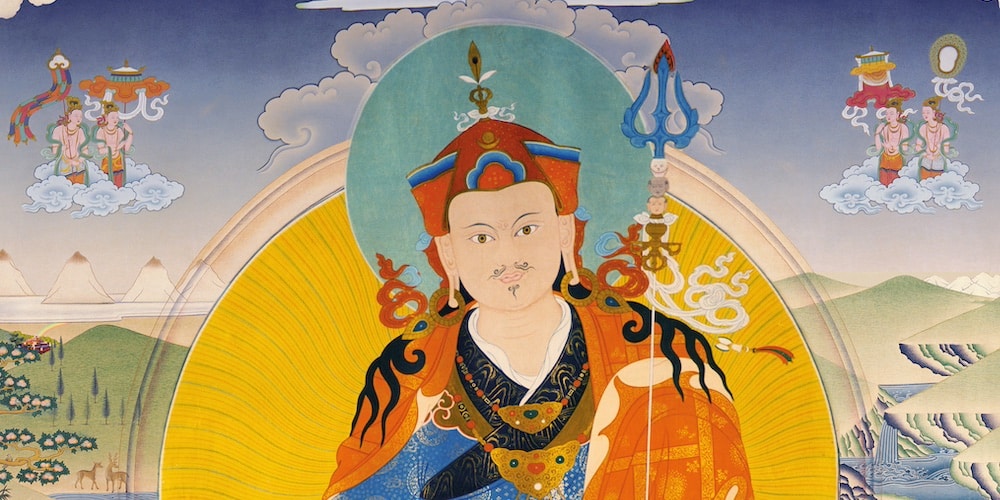
Inspired by the meaning of the word Rigpa, Sogyal Rinpoche gave the name Rigpa to his work, and to the vehicle he developed to serve the Buddha’s teaching in the West.
Bringing the Dharma to the West
One of the early generation of Tibetan Buddhist teachers to settle in the West in the 1970s, Sogyal Rinpoche began giving Buddhist teachings while studying at Cambridge University. Over the following four decades, he established groups and centres—first in Europe and later in Australia, the USA and Asia—and taught thousands of people worldwide each year in public talks, weekend seminars and retreats.
Sogyal Rinpoche introduced a complete path of Dharma study and practice, beginning with introductory teachings on meditation, compassion and wisdom, and leading to the highest teachings of Vajrayana and Dzogchen.
The teachings he gave over the years form the basis of the programmes, courses and retreats that Rigpa continues to offer in centres around the world. At the heart of Rigpa’s path are the essential pith instructions of the Nyingma tradition of Tibet.
Wishing to make the Buddha’s teachings accessible to people from all walks of life, Sogyal Rinpoche taught in a wide variety of settings, adapting his approach to the needs of each audience. He gave public talks in town halls, led seminars for health professionals caring for the dying, held retreats with business leaders, spoke at dance parties, guided students in long-term retreat, and taught retreats around the world.
The teachings Sogyal Rinpoche gave, preserved in audio and video recordings, transcripts and publications, remain a central resource for the Rigpa community and continue to be studied by students around the world.
Moreover, since 2019 Rigpa’s study and practice programmes has been led by a group of entrusted Rigpa Teachers and Practice Holders. This group is guided by a number of eminent masters of the Nyingma tradition of Tibetan Buddhism, in particular Rigpa’s Spiritual Advisers Dzongsar Khyentse Rinpoche, Jetsün Khandro Rinpoche and Khenchen Namdrol Rinpoche.

Il libro tibetano del vivere e del morire
In 1992, Sogyal Rinpoche published the spiritual classic Il libro tibetano del vivere e del morire. The book touched the hearts and minds of millions of readers around the world and introduced many people to Buddhist teachings on life, death, meditation and compassion. In the early 1990s, the book also led a rapidly increasing number of people to join courses and programmes in Rigpa’s centres around the world which were based on the content of Rinpoche’s book. Courses based on Il libro tibetano del vivere e del morire are given online and in Rigpa centres in various countries.
Inviting Teachers of All Buddhist Traditions
In the spirit of the rimé (non-sectarian) approach, Rigpa has from its beginnings invited teachers from all Tibetan Buddhist traditions, as well as masters from other Buddhist schools and teachers from different spiritual traditions, to teach in its centres.
In the early years, this included visits from some of the greatest masters who were raised in Tibet such as the 16th Gyalwang Karmapa, Dudjom Rinpoche, Dilgo Khyentse Rinpoche, Thrangu Rinpoche, Dodrupchen Rinpoche and Tulku Urgyen Rinpoche.
Moreover, Sogyal Rinpoche and Rigpa have had the great honour of hosting His Holiness the 14th Dalai Lama on a number of occasions in Europe and USA, including his first ever visit to the West in 1973 and later visits to UK (1981 and 1984), USA (1989) and France (1982, 2000 and 2008).
Rigpa continues to host teachings, practice events and major dharma transmissions led by leaders of all lineages of Tibetan Buddhism. These events are open to all students following the Tibetan Buddhist tradition, providing opportunities for vast collaborative gatherings of Western Buddhist students. In 2025, Kyabjé Shechen Rabjam Rinpoche bestowed the entire transmission of the Longchen Nyingtik (Nyingtik Tsapö) to a gathering of over 1,000 participants from different sanghas at Lerab Ling, Rigpa’s retreat centre in southern France. This marked the first time these transmissions were given in their entirety in Europe.
Since its first drupchen (a form of intensive Vajrayana group practice) in 1997, Rigpa has developed a tradition of annual drupchös and drupchens. This tradition has grown through in-depth guidance from eminent masters, including Neten Chokling Rinpoche and Orgyen Tobgyal Rinpoche. To establish this tradition in the West, led by Western practitioners, groups of Rigpa students have received thorough training at Chokling Monastery in Bir and Dodrup Monastery in Sikkim, as well as from visiting lamas and lopons (practice specialists). In 2026, under the close guidance of Dzongsar Khyentse Rinpoche, Rigpa hosted its first drupchen conducted entirely in English, in the long life practice of Chimé Pakmé Nyingtik. This development marks an important step in the evolution of Tibetan Buddhism in the West.
A large collection of teachings given in Rigpa by masters of all Tibetan Buddhist traditions over more than four decades can be found on Rigpa’s online platform, Prajna Online.
Retreat Centres and Traditional Practice Retreats
Rigpa’s two main retreat centres—Lerab Ling in southern France and Dzogchen Beara in south-west Ireland—were established in the 1990s as places where students could gather, particularly during the Summer months, for annual study and practice retreats led by Sogyal Rinpoche and other Tibetan Buddhist masters.
For more than three decades, Lerab Ling and Dzogchen Beara have offered regular programmes of retreats, seminars and workshops led by Tibetan Buddhist masters and Western Buddhist teachers, including Rigpa instructors and teachers. Through these programmes, thousands of individuals have been introduced to the wisdom of the Buddha and to Tibetan spiritual culture, and many students have embarked upon, and progressed along a complete path of Buddhist study and practice.
The uniquely secluded environment and facilities at Dzogchen Beara made it an ideal location for strict group practice retreats (nyenpas), which have been held there since 1994, upholding the traditional discipline and continuity of long practice retreat that exists within the Tibetan Buddhist tradition.
From 2006 to 2009, Sogyal Rinpoche led an historic Three-Year Retreat in Lerab Ling Retreat Centre, France attended by approximately 450 students from around the world. Adapting the traditional model of the three-year retreat for Western students, Sogyal Rinpoche and other eminent masters taught over a period of seven months each year, while participants spent the remaining five months in closed practice retreat.
Around 200 students undertook the entire Three-Year Retreat present in Lerab Ling, while others participated by attending the seven-month teaching periods at Lerab Ling and completing the practice periods in their home countries or in the East. During the Three-Year Retreat, participants received a complete, authentic and in-depth training in the Tibetan Buddhist tradition.
An innovative feature of the retreat was the Home Retreat programme, which was followed by more than three thousand people in forty-one different countries. Many dedicated four hours a day to the retreat, while continuing to work and lead busy family lives.

Preserving Tibet’s Unique Spiritual Traditions, Art and Culture
Lerab Ling and Dzogchen Beara are home to traditional Tibetan temples built as authentic expressions of Tibet’s spiritual culture and as testimonies to its uniqueness.
The temple at Lerab Ling, completed in 2006, was inaugurated by His Holiness the Dalai Lama in 2008. The temple at Dzogchen Beara—the first Tibetan Buddhist temple in Ireland—was completed in 2024, and will be inaugurated in July 2026 by His Holiness Sakya Gongma Trichen Rinpoche and His Holiness 43rd Sakya Trizin, Gyana Vajra Rinpoche.
The foremost concern in the building of both temples was to respect the authenticity of the spiritual traditions that were their source and inspiration. A number of the most eminent Tibetan teachers and scholars were consulted to ensure every detail was according to tradition and every feature of the temples was drawn from the best examples to be found in Tibetan monasteries in the Himalayas.
At the same time, the temples feature a number of modern innovations not seen before in traditional monastery design. At the suggestion of Sogyal Rinpoche and the architects, floor-to-ceiling reflecting windows were introduced on the ground floor to give panoramic views of the surrounding nature.
Many lamas who have visited Lerab Ling and Dzogchen Beara have emphasised the important role that centres such as these play in preserving Tibet’s wisdom culture.
Of the temple at Dzogchen Beara, Orgyen Tobgyal Rinpoche said:
“If you build this temple here in Dzogchen Beara, and inside erect representations of the enlightened body, speech and mind, and have practitioners practise there, then this will be the cause for the teachings of the Buddha to remain for long and will have enormous benefit for the world at large; protecting against famine, against war and epidemics and so on.”
His Holiness Sakya Gongma Trichen said in Lerab Ling in 2008:
“We are so impressed that, in this completely different culture and completely different atmosphere in the heart of Europe, you managed to start not only a great temple, but also that there are so many serious Dharma practitioners, so many of you doing a retreat together. It’s a great joy for me to see that the Dharma is not only deeply rooted here, but is flourishing in many ways”
Stupas: An Architectural Manifestation of the Enlightened Mind
Under the guidance of Tulku Rigdzin Pema Rinpoche and meticulously following tradition, from 2022 – 2025 Rigpa undertook the construction of a series of stupas in its main centres in Europe and in Tashiding, West Sikkim.
Traditionally, there are eight shapes of stupas representing the eight great events of the life of Buddha Shakyamuni. The Rigpa stupas are in three of these forms—the Great Enlightenment Stupa was built in Lerab Ling while in Dzogchen Beara the Stupa of the Descent from Tushita Heaven was built and in Dharma Mati the All Victorious Stupa was built. Each of the stupas contains relics of Guru Rinpoche, Jigmé Lingpa, Longchenpa, Patrul Rinpoche, Do Khyentse, Dudjom Rinpoche as well as those of Sogyal Rinpoche and Mayum Pema Tsering Wangmo and many other masters.
Spiritual Care Programme and Centres
Rigpa’s Spiritual Care Programme was inspired by the tremendous response to Sogyal Rinpoche’s book, Il libro tibetano del vivere e del morire, with the aim of training medical professionals and carers working with the dying, and of supporting those experiencing terminal illness and their families. The programme ran courses for medical professionals and care-givers in Europe, the United States and Australia, and trained an estimated 30,000 people from 1993-2018. Since 2018, trainings and support inspired by the Spiritual Care Programme have been run in a number of countries around the world by Rigpa students through their independent organisations. Many of these trainings and related courses are conducted in Rigpa’s centres.
Inspired by the Spiritual Care Programme, Rigpa established two Spiritual Care Centres: one at Dzogchen Beara, which opened in 2009, and the other at Bad Saarow near Berlin opened in 2016.
The Spiritual Care Centre at Dzogchen Beara offers personal support to people facing long-term or life-limiting illness, living with disability, or experiencing grief, stress or burnout.
Sukhavati Spiritual Care Centre provides space for modern, holistic and meaningful coexistence and offers compassionate and dignified support in sickness, dying and death.

Conferences Connecting Buddhist Wisdom with Science and the Environment
At a time of growing scientific interest in meditation, between 2002 and 2016 Rigpa and Lerab Ling hosted a series of international conferences that brought together leading Buddhist teachers, scientists, psychologists and educators to deepen the conversation between ancient wisdom and modern understanding.
Conference themes included:
- Physical Pain and Suffering (2002)
- Depression and Mental Suffering (2006)
- Meditation and Health: The Therapeutic Benefits of Meditation in Modern Life (2010)
- Empathy, Compassion and Health (2013)
- Meditation and Human Values in the Workplace (2014)
- Mindfulness and Awareness: Bringing Wisdom into Society (2015)
- Empathy and Compassion in Society (hosted under the auspices of the Tenzin Gyatso Institute): Four conferences were held, bringing together internationally renowned neuroscientists, psychologists and thinkers to share their insights and present methods for developing compassion. (London 2012 and 2013, California 2014, Oslo 2016)
In 2022, Lerab Ling hosted its first Wisdom Working for the Earth forum, bringing together experts and practitioners from a range of environmental and Buddhist disciplines.
Controversy and Transition
Nel 2017 alcuni suoi allievi hanno presentato denunce per abusi nei confronti del fondatore di Rigpa, Sogyal Rinpoche. All’epoca, Sogyal Rinpoche si è dimesso dalla carica di direttore spirituale dell’organizzazione Rigpa e si è ritirato. A seguito di una grave malattia, è venuto a mancare nell’agosto 2019.
The organisation reflected deeply on the complaints that were made which led to significant changes to its governance and the introduction of safeguarding measures including a Code of Conduct and Grievance Procedure. Read more about Rigpa’s response.
In 2017 Rigpa’s first Vision Board, made up of senior students in the organisation, was established to ensure that the Rigpa community has clear spiritual guidance and direction. The Vision Board is guided by Rigpa’s Spiritual Advisers: Dzongsar Khyentse Rinpoche, Mindrolling Jetsün Khandro Rinpoche and Khenchen Namdrol Rinpoche and a number of other eminent Tibetan Buddhist teachers. [Read more about the Vision Board and Rigpa’s teams]
Teachers in Rigpa
For over 40 years Sogyal Rinpoche was the principal teacher in Rigpa. Following his resignation in 2017, Rigpa’s study and practice programmes have been led by a group of entrusted Rigpa Teachers and Practice Holders.
This group is guided by a number of eminent masters of the Nyingma tradition of Tibetan Buddhism, in particular Rigpa’s Spiritual Advisers Dzongsar Khyentse Rinpoche, Jetsün Khandro Rinpoche and Khenchen Namdrol Rinpoche.
How Rigpa is Organised Today
Today, Rigpa has groups and centres in 28 countries, with students based in many other locations around the world. Each national Rigpa association operates as a charitable, non-profit organisation within its own country, and each country and retreat centre is a signatory to the One Rigpa Network agreement.
Established in 2023, the One Rigpa Network formalises how Rigpa entities work together and share decision-making in order to uphold Rigpa’s vision and ensure responsible governance.
Spiritual direction is overseen by Rigpa’s Vision Board, while operational management is led by an International Steering Group with the support of specialist advisory groups who advise on topics such as curriculum, programme, finance, communication and safe environment. Read more about Rigpa’s teams.
Explore upcoming teachings, courses, and events by viewing our full Calendario dei Programmi.